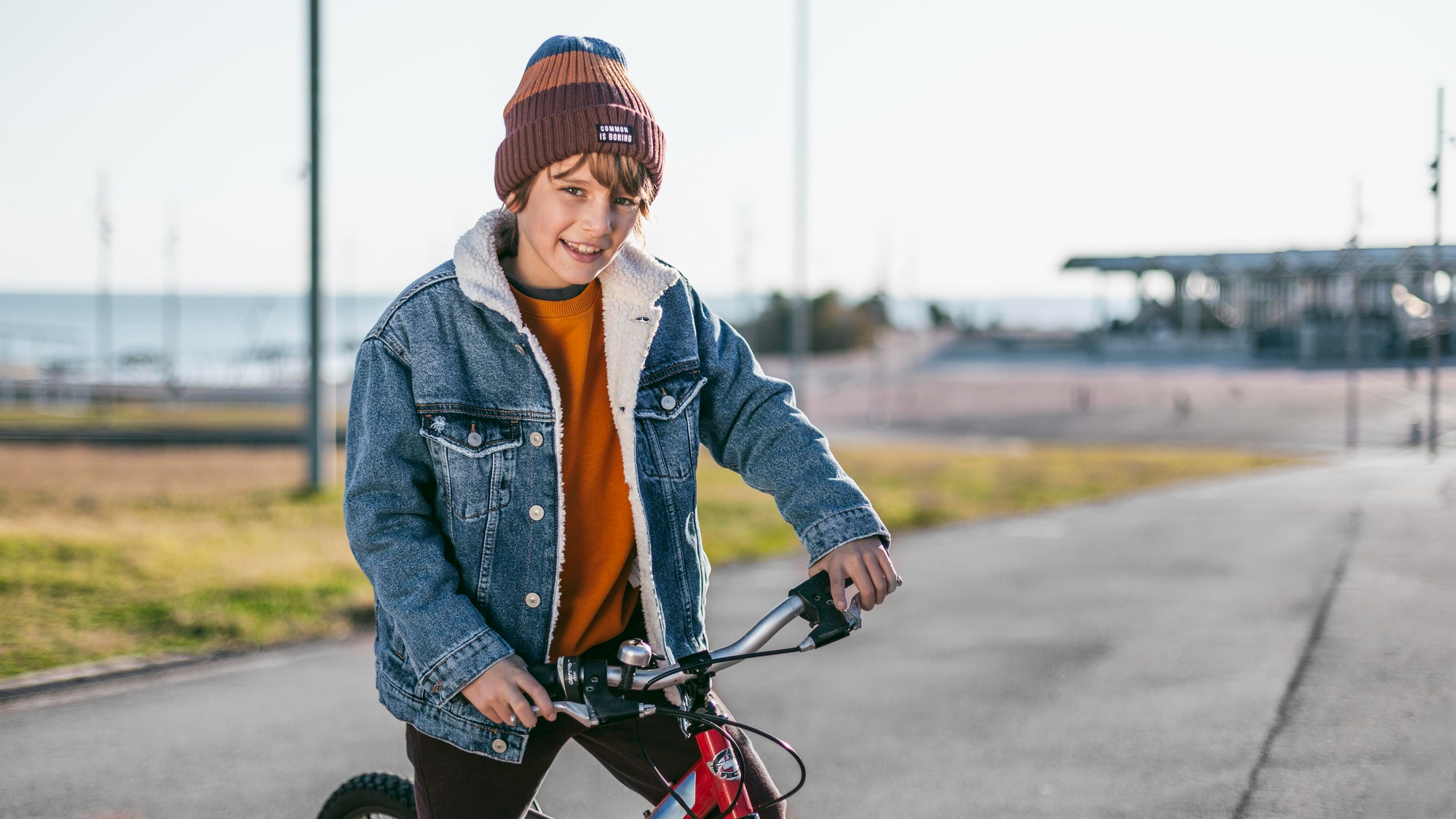
Jake saved for eleven months and three weeks.
I know the exact duration because he started the day after Christmas, when my mother gave him a book about mountain biking trails in the Pacific Northwest, and because I watched every stage of it from the specific parental vantage point of someone who is trying not to interfere with something that is going better without the interference.
He was eleven when he started saving and twelve by the time he finished.
The money came from the lawn mowing, primarily.
He had five regular clients in the neighborhood, people who had agreed to pay him fifteen dollars a cut and who had the specific loyalty of clients who appreciate reliability, which Jake had in abundance, the specific reliability of someone who shows up when he says he will and does the work in the order it needs to be done without being reminded.
He kept a record.
This was his own idea, a spiral notebook with a column for each client’s name and the dates and the amounts and a running total that he updated in pencil every Saturday night before he went to sleep.
I found out about the notebook by accident.
I was walking past his room and his door was open and he was sitting at his desk with the notebook open, tallying something, and he had the specific expression of a person who is doing arithmetic that matters.
I said: what are you working on?
He said: the bike fund.
He showed me the notebook.
I looked at the columns and the dates and the running total.
He had organized it the way I had organized things when I was working in finance, before I moved to education administration, with the specific clarity of someone who understood that the record was itself a kind of tool.
I had not taught him this.
He had arrived at it himself.
I said: this is very organized.
He said: it helps me see how close I am.
He said: also it helps me not spend it.
I said: how close are you?
He said: sixty-three percent.
He said: at this rate I’ll have it by August.
I said: which bike?
He turned the notebook to the back page.
He had printed a photograph of the bike from the manufacturer’s website and taped it to the inside back cover.
It was a Diamondback Atroz.
A 27.5 inch mountain bike in matte green.
He had circled the price in red pen.
Four hundred and twenty dollars.
I said: that’s a good bike.
He said: I know. I read every review.
He said: I watched six YouTube videos about the components.
I said: did you compare it to other bikes?
He said: yes. There are three in this price range. This one is the best value.
He said: I made a spreadsheet.
I said: where?
He pulled out his tablet and showed me a Google spreadsheet with three columns, one for each bike, and rows for every comparable feature he had identified, with checkmarks and Xs and a row at the bottom for his overall rating.
I looked at the spreadsheet.
He had weighted the categories by importance.
Trail durability was weighted most heavily.
Derailleur quality was second.
Frame geometry was third.
He had done this at eleven years old because he wanted a bike.
My name is Mark Callahan.
I am forty-one years old and I teach history at the middle school three miles from our house and I have been Jake’s father for twelve years and I still regularly encounter things he does that I was not prepared for.
The spreadsheet was one of them.
My wife Sarah has been Jake’s mother for the same twelve years and she has the specific quality of a parent who notices things and mentions them later in the quiet of after the kids are asleep.
She mentioned the spreadsheet on the night I saw it.
She said: I know.
She said: I’ve known about the spreadsheet since March.
I said: you didn’t tell me.
She said: I thought you should see it yourself.
I said: why?
She said: because it’s better to discover things about your kid than to be told about them.
She was right about this.
She is right about most things.
Jake bought the bike on a Saturday in August.
He had counted the money the night before, twice, with Sarah watching, and when he had confirmed the amount he put it in an envelope in his desk drawer with the words BIKE FUND DO NOT TOUCH written on it in capital letters and exclamation points.
The next morning he woke up at seven-fifteen, which was earlier than he usually woke on Saturdays, and we drove to the bike shop.
I had offered to drive.
He had accepted without making a big deal of it, which was its own thing, the non-performance of someone who is not doing this for an audience.
He went to the counter.
He asked to see the Diamondback Atroz in the medium frame.
The salesperson, a young woman with a ponytail, brought it out.
Jake walked around it.
He checked the derailleur.
He checked the frame geometry by eye, which he had apparently learned to do from the YouTube videos.
He said: can I test it?
She said: of course.
He rode it in the parking lot for eight minutes.
He came back.
He said: I’ll take it.
He put the envelope on the counter.
She counted it.
She looked at him.
She said: you saved this yourself?
He said: yes.
She said: how long did it take?
He said: almost a year.
She looked at him with the expression of someone who has just encountered something unexpected and pleasant.
She said: good for you.
She was not performing the compliment.
She meant it in the specific way of someone who recognizes a real thing when they see it.
He rode the bike home.
I drove beside him with the hazards on, slowly, because it was a four-mile route and some of it was on the shoulder of a road that was busier than I liked.
He did not ask me to.
He did not need me to.
But I did it anyway because I was his father and the road was busy and some choices you make because they are yours to make regardless of whether they are needed.
The bike lived in the garage when it was not being ridden.
Jake washed it after every trail ride, which he did on weekend afternoons when the weather was right, going to a trail network about twelve minutes from the house.
He maintained the chain.
He checked the tire pressure before every ride.
He kept the notebook, which had evolved from a money-tracking document into a maintenance log, dates and oil and adjustments and notes about what he had observed on the trail about the bike’s performance.
The bike was his.
Not in the way that things given to children are theirs.
In the specific way of things earned through time and discipline, through the accumulated weekends of mowing and the spreadsheet and the eleven months and three weeks of not spending what he had decided to save.
His.
Gary Pelton was our neighbor on the right side.
He had moved in four years ago and he was, in the way of some neighbors, someone you coexisted with rather than knew, whose life ran on a parallel track without significantly intersecting with yours.
He was in his mid-fifties and worked in some kind of sales and had the quality of a man who moved through the world expecting it to accommodate him, the specific ease of someone for whom accommodation had been the consistent experience.
He had a truck.
A large pickup, four years old, that he kept clean and that he drove with the specific style of people who like driving large trucks, somewhat fast on residential streets and with turns taken wider than necessary.
We had not had significant conflict before the bike.
We had had the minor conflicts of neighborliness, the occasional parking question and the once when his tree dropped branches onto our side and I had mentioned it and he had said he’d take care of it and had not taken care of it and I had eventually arranged it myself.
The kind of minor conflicts that are navigated by people who have decided they are not worth significant energy.
The bike was a different category.
Jake had parked the bike at the edge of the lawn.
This was a Friday afternoon, two weeks before this story begins.
He had come home from school, changed, ridden the bike for an hour, and then come inside because it was dinner time.
He had parked the bike on our grass, at the property line edge, not in the driveway, not on the sidewalk, not in the street.
On our grass.
I had seen it there when I came home at five-thirty.
It had been there for at least twenty minutes before Gary backed out of his driveway without checking.
I heard the sound from inside the house.
Not a crash, exactly.
A series of sounds.
Metal under something heavy, the specific sounds of something being damaged.
Then Jake’s voice, outside.
He said: hey.
He said it the way people say things when they cannot yet process what has happened.
I went outside.
Gary’s truck was in the street.
Gary was standing beside it.
Jake was standing at the edge of the lawn looking at the bike.
The bike was not rideable.
The frame was bent at the junction of the down tube and the bottom bracket, which was the specific bend that meant the frame was structurally compromised.
The front wheel was torqued sideways.
The derailleur was against the ground.
I looked at the bike.
I looked at Jake.
He was twelve years old and he was standing very still.
He had not cried.
He was not going to cry.
He was doing something else with what he was feeling, holding it, the specific stillness of a person who is processing something too large to express immediately.
I walked over to Gary.
I was calm.
I was genuinely calm at first, the calm of someone who believes the situation is going to be resolved reasonably.
I said: Gary, you backed over Jake’s bike.
He said: yeah. It shouldn’t have been parked there.
I said: it was on our lawn.
He said: it was parked too close to the road. Technically not my fault for not looking harder.
He said it with the specific tone of someone who has already decided this was not their problem.
I said: Gary, that bike cost four hundred dollars. Jake saved for almost a year.
He said: I’m sorry about that. But I was backing out of my own driveway.
I said: you backed over property on someone else’s lawn.
He said: I couldn’t see it.
I said: it was there for twenty minutes. We can check the security camera.
He looked at the camera above our garage.
He said: I’m not paying for a bike that was parked in a dangerous spot.
I said: Gary.
He said: look, Mark. I feel bad for the kid. But this is not on me legally or otherwise.
I had the argument for ten minutes.
I went nowhere.
Gary went inside.
Jake and I stood at the edge of the lawn.
I looked at the bike.
I looked at my son.
He was still holding the stillness.
I said: Jake.
He said: it’s okay.
He said it before I could say anything.
He said: I’ll figure it out.
That was the Friday.
I spent the weekend thinking through the options.
The security camera footage clearly showed the bike had been there for twenty minutes before Gary backed out.
Small claims court would handle four hundred and twenty dollars.
I had a colleague whose husband was an attorney who had mentioned once that he handled exactly this type of dispute.
I was going to give it until Wednesday.
On Saturday morning, Jake came to find me in the kitchen.
He had the expression he got when he had been thinking about something for a while and had arrived at a conclusion.
He said: Dad.
I said: yes.
He said: I’ve got it handled.
I said: Jake.
He said: I don’t need your help with this one.
He said it without dismissiveness.
He said it the way he said things when he was serious.
I should have asked more questions.
I said: what are you planning?
He said: something.
He said: I’ll tell you after.
He went next door.
I stood in the kitchen.
Sarah came downstairs.
She said: where is he going?
I said: next door.
She said: to Gary?
I said: yes.
She said: what is he doing?
I said: he said he has a plan.
She looked at me.
She said: you let him go?
I said: he said he had it handled.
She said: Mark.
I said: I know.
She said: should we.
I said: let’s give him five minutes.
We gave him five minutes.
He was over there for forty-five.
When he came back, he was carrying a piece of paper.
He sat at the kitchen table.
He put the paper on the table.
He said: Gary is going to pay for the bike.
I stared at him.
I said: how?
He said: I had a conversation with him.
I said: Jake. Gary told me it wasn’t his fault. He wasn’t going to pay.
He said: I know. I heard you from the yard.
He said: but he hadn’t talked to me yet.
Sarah said: what did you say to him?
He said: a few things. Can I tell it in order?
I said: yes.
He said: first I knocked on the door. He answered and I could see he was going to be annoyed about it. Like he thought I was there because of you.
He said: I told him I wasn’t there because of Dad. I was there to ask him some questions.
He said: he looked like he was going to say no but I think he figured it would take two minutes so he said come in.
He said: I went in.
He said: I sat at his kitchen table. He sat across from me. He asked what I wanted.
I said: and?
He said: I asked him when he bought his truck.
Sarah said: what?
He said: I asked him when he bought his truck. He said four years ago.
He said: I asked him how much it cost. He said it was none of my business. I said okay.
He said: then I asked him how long he’d been saving for it.
He paused.
He said: Gary kind of laughed at that. He said he didn’t save for it. He bought it.
He said: I said I know. I said I just wanted to understand the difference.
He said: I told him about my bike. I told him about the lawn mowing and the eleven months and the notebook.
He said: I showed him the notebook.
I said: you brought the notebook?
He said: yes.
He said: I showed him the dates and the amounts. I showed him August fifteenth. The day I bought it.
He said: Gary looked at it for a while.
He said: then I said I know you don’t think it was your fault legally. I said I looked it up and you might be right about that. The bike was on our property but it was at the edge and the law about parking is complicated.
Sarah looked at me.
Jake said: I told him I wasn’t there to argue about the law.
I said: what did you say you were there for?
He said: I said I was there to tell him what the bike meant.
He said: I told him that I learned from that bike how to keep a commitment. I told him that every week for eleven months I got up on Saturday and went to mow lawns even when I didn’t want to. Even when my friends were doing other things.
He said: I told him I learned that if you want something real, you save for it. You plan it. You do the work.
He said: I said I think you probably know how to do that too. Because I’ve seen you work on things.
He paused.
He said: Gary got quiet when I said that.
He said: I had seen him working on his truck engine last summer. I mentioned it. I said I saw you out there for three hours on a Saturday morning. I figured that meant you understood what it was like to work on something you cared about.
I said: Jake.
He said: then I told him what I wanted.
He said: I said I’m not asking you to fix something you think wasn’t your fault. I’m asking you to do something because it’s the right thing to do.
He said: I told him I wasn’t mad at him. I said I think you backed out without checking because everyone does sometimes. I’ve done it on my bike. I’ve gone too fast and not seen something.
He said: I said the difference is when that happens, I own what I did.
He was quiet for a second.
He said: Gary didn’t say anything for a while.
He said: then he asked how much the bike cost.
He said: I told him four hundred and twenty dollars.
He said: he went to the other room. He came back with an envelope.
He slid the paper across the kitchen table.
It was a note.
Gary’s handwriting.
It said: four hundred and twenty dollars for the bike. Jake, I’m sorry I wasn’t more careful. I should have checked.
The paper was under the envelope.
The envelope had cash in it.
Four hundred and twenty dollars.
I sat at the table.
I looked at the paper and the envelope.
I looked at my son.
He said: he said he was sorry.
I said: yes.
He said: he actually meant it.
I said: how do you know?
He said: his voice changed when he talked about the work. When I said I figured he knew what it was like.
He said: you can tell when someone recognizes something true.
He said: he recognized it.
I said: Jake.
He said: yes.
I said: how did you know to say those things?
He thought about it.
He said: I didn’t know. I thought about it all week.
He said: first I was angry.
He said: I thought about all the things I could do. Small claims court. Your lawyer thing. Stuff like that.
He said: but then I kept thinking. What did I actually want?
He said: I wanted the bike replaced. But I also wanted him to understand what it was.
He said: if I took him to court, he might pay but he wouldn’t understand.
He said: if I went and talked to him, maybe he wouldn’t pay and wouldn’t understand.
He said: but maybe he would.
He said: I figured talking was worth trying first.
I said: it was worth trying.
He said: yes.
He said: Dad. Can I say something?
I said: yes.
He said: when you were arguing with him that day. On Friday.
I said: yes.
He said: you were right about everything. You said exactly the right things about the law and about where the bike was and about how long it had been there.
I said: but.
He said: but you were arguing.
He said: he was already defending himself. He didn’t know how to back down.
He said: I gave him a way to back down.
He said: I didn’t say he was wrong. I said I understood why he did what he did. And then I showed him what it cost.
He said: there’s a difference between making someone admit they were wrong and letting them decide to do the right thing.
I looked at my son.
He was twelve years old.
He had spent eleven months and three weeks saving for a bike.
He had kept a notebook.
He had made a spreadsheet.
He had watched the bike get destroyed and stood very still and then gone home and spent a week thinking about what he actually wanted and what approach would get him there.
He had walked next door with the notebook.
He had sat at Gary’s kitchen table and talked about the truck engine on the Saturday morning.
He had given Gary a way to do the right thing rather than a demand that he admit he had done the wrong thing.
He said: the bike is the same amount of money either way.
He said: but this way he’s not just paying. He’s sorry.
I said: yes.
He said: that matters.
I said: yes. It does.
Sarah was looking at the table.
She had not said anything for a while.
She said: Jake.
He said: yes.
She said: I’m very proud of you.
He said: thanks.
He said it simply.
Not shrugging it off.
Not making it large.
Just: thanks.
He picked up the envelope.
He said: can I go to the bike shop today?
I said: yes.
He said: same bike?
I said: whatever you want.
He said: same bike. They had one left in stock. I called this morning.
I said: you called this morning?
He said: before I went over. Just to make sure.
Sarah looked at me.
I looked at her.
We were doing the specific parental communication of two people who are processing something simultaneously and who have the specific shorthand of people who have known each other for a long time.
She was thinking what I was thinking.
He had called to check inventory before he went next door.
He had been certain enough of the outcome that he had called the bike shop first.
Not because he was arrogant.
Because he had done the preparation.
He had thought about it all week and he had arrived at a position he believed in and he had gone in prepared.
The preparation included calling the bike shop.
We drove to the bike shop.
He went to the counter.
The same salesperson with the ponytail.
She recognized him.
She said: back already?
He said: I need a replacement.
She said: replacement?
He said: same bike. The neighbor backed over mine.
She said: what?
He said: it’s okay. He paid for it.
She said: oh.
She said: we have one left in medium.
He said: I know. I called this morning.
She went to get it.
She brought it out.
He walked around it.
He said: this one has the updated derailleur.
She said: yes. The manufacturer changed the component tier in the new inventory.
He said: is that better or worse?
She said: objectively better. Same warranty.
He said: same price?
She said: same price.
He said: I’ll take it.
He put the envelope on the counter.
She counted it.
She said: four hundred and twenty.
He said: yes.
She said: you’re two dollars short of tax.
He said: I know.
He reached into his pocket and put two dollars on the counter.
He had brought exact change.
He rode the bike home.
I drove beside him with the hazards on.
On the way home, he said: Dad.
I said: yes.
He said: the tax thing.
I said: yes?
He said: I should have mentioned the tax when I told Gary the price.
I said: you were close enough.
He said: next time I’ll be more precise.
I said: okay.
He said: or I should have just asked for four hundred and twenty-two.
He said it with the tone of someone filing away a lesson.
Not criticizing himself.
Noting the improvement.
At home, he put the bike in the garage.
He got out the notebook.
He opened it to a new page.
He wrote the date.
He wrote: New bike. Bike 2. Same model.
He wrote: same setup procedure.
He looked up at me.
He said: I’ll need to adjust the seat height.
I said: yes.
He said: I know how.
He said: I watched a video.
I said: of course you did.
He got out the hex wrench.
He adjusted the seat height.
He said: could you check the torque spec on the handlebars? I want to make sure they didn’t over-tighten it at the shop.
I said: I don’t know the torque spec.
He said: four to six newton-meters for a 31.8mm clamp.
He said: I looked it up.
I said: I don’t have a torque wrench.
He said: I know. Can we get one?
I said: yes.
He said: or I can use the feel method until we do. I’ve been practicing.
He said: the feel method is less precise but if you know the reference, it’s workable.
I went inside.
Sarah was in the kitchen.
I said: he had a torque spec.
She said: for what?
I said: the handlebar clamp.
She said: of course he did.
I said: I need a torque wrench apparently.
She said: add it to the list.
I said: the list.
She said: we have a list. Of things Jake is going to make us buy over the years.
I said: this is the first item.
She said: it will not be the last.
I said: no.
She said: Mark.
I said: yes.
She said: today.
I said: yes.
She said: he gave him a way to back down.
I said: yes.
She said: rather than demanding he admit he was wrong.
I said: yes.
She said: he knew the difference at twelve.
I said: yes.
She said: where did he learn that?
I said: I don’t know.
She said: did you teach him that?
I said: I teach history. I know examples of people who have done it and people who haven’t.
She said: did you tell him the examples?
I said: I don’t remember specifically telling him.
She said: maybe he just worked it out.
I said: maybe.
She said: or maybe you showed him more than you think.
I said: maybe.
She said: I’m going to assume it was both.
I said: that seems fair.
She said: the notebook.
I said: yes.
She said: he brought the notebook.
I said: yes.
She said: because he knew showing was better than telling.
I said: yes.
She said: at twelve.
I said: at twelve.
She said: I need a moment.
I said: yes.
She said: I don’t know when that happened.
I said: the spreadsheet was in March.
She said: right.
She said: it’s been happening for a while.
I said: yes.
She said: we’ve just been busy watching.
I said: yes.
I went back to the garage.
Jake was checking the tire pressure.
He had the gauge in his hand and the specific focused expression of someone doing a task correctly.
He checked both tires.
He put the gauge away.
He opened the notebook.
He wrote down the tire pressure.
He wrote the date.
He said: Dad.
I said: yes.
He said: thank you for driving beside me on the road.
I said: yes.
He said: with the hazards on.
I said: yes.
He said: I know I said I had it handled.
I said: yes.
He said: I meant the Gary thing.
He said: I still needed you for the road.
I said: yes.
He said: those are different things.
I said: yes.
He said: some things I can handle and some things I need you.
He said: the Gary thing I could handle.
He said: the busy road with the trucks I still need you.
I said: yes.
He said: is that okay?
I said: Jake.
He said: yes.
I said: that is exactly how it’s supposed to work.
He said: okay.
He said: good.
He looked at the bike.
He said: I’m going to take it to the trail tomorrow.
He said: the same trail.
I said: yes.
He said: I want to ride the north loop.
I said: it’s a good loop.
He said: I’ve only done it once.
He said: I want to get better at the technical sections.
I said: the roots?
He said: mostly the switchbacks.
He said: I’ve been thinking about my weight distribution.
I said: yes.
He said: if I shift back earlier before the turn I have more control.
I said: you figured that out?
He said: I watched a video.
I said: of course.
He said: and then I thought about it during the week.
He said: I think the physics support it.
I said: I’ll take your word for it.
He said: you could look it up.
I said: I believe you.
He said: Dad.
I said: yes.
He said: one more thing about Gary.
I said: yes.
He said: when I was coming out. When he gave me the envelope.
I said: yes.
He said: he said something.
I said: what?
He said: he said when you were my age, did anyone teach you to think like that?
I said: what did you say?
He said: I said my dad thinks like that. I’ve watched him.
He said it simply.
Not looking at me.
Looking at the bike.
He said: I don’t know if that’s true exactly.
He said: but I thought it was the right thing to say.
He said: also it’s mostly true.
I said: Jake.
He said: yes.
I said: thank you.
He said: yes.
He closed the notebook.
He put it on the shelf where it lived.
He turned off the garage light.
He went inside.
I stood in the garage for a minute.
I looked at the bike.
Matte green.
Diamondback.
Bike 2, same model, updated derailleur, four to six newton-meters for a 31.8mm clamp.
I thought about eleven months and three weeks.
I thought about the spreadsheet in March.
I thought about Gary’s kitchen table and the notebook and Gary’s truck engine on the Saturday morning.
I thought about giving someone a way to back down rather than demanding they admit they were wrong.
I thought about the difference between making someone pay and letting them decide to do the right thing.
I thought about the call to the bike shop before he went next door.
I thought about two dollars in his pocket for the tax.
I had been watching him for twelve years.
You watch long enough and you see things.
You don’t always see them coming.
Sometimes the thing you’re watching is already further along than you thought.
I went inside.
Sarah was making dinner.
Jake was at his desk.
The notebook was open.
He was writing something.
I stood in the doorway.
I said: what are you writing?
He said: notes on the Gary conversation.
He said: what worked and what I’d do differently.
I said: you’re keeping notes.
He said: yes.
He said: if it comes up again.
He said: for something else.
He said: it might be useful.
He said: also I just want to remember.
I said: what do you want to remember?
He said: that it worked.
He said: that talking to someone like they can do the right thing is different from accusing them of doing the wrong thing.
He said: I want to remember that before I forget it.
I said: Jake.
He said: yes.
I said: don’t forget it.
He said: I won’t.
He went back to writing.
The notebook.
Always the notebook.
I went to the kitchen.
Sarah handed me a glass of water without being asked, which was one of the things she did because she noticed things.
She said: is he taking notes?
I said: yes.
She said: on the Gary conversation.
I said: yes.
She said: he said you were the reason.
I said: yes.
She said: are you?
I said: I think he is the reason.
She said: he said he watched you.
I said: yes.
She said: maybe both.
I said: yes.
She said: maybe neither of you knows exactly where he learned it.
I said: yes.
She said: that’s how it usually works.
I said: yes.
She said: the things that really stick.
I said: yes.
She said: they come from somewhere but you can’t always trace it back.
I said: yes.
She said: you just notice one day that it’s there.
I said: yes.
She said: and you think: when did that happen.
I said: yes.
She said: and you can’t answer it.
I said: yes.
She said: but it happened.
I said: yes.
She said: that’s the whole thing.
I said: yes.
I said: that’s exactly the whole thing.
We made dinner.
From the other room, the sound of the notebook.
Outside, the bike in the garage.
Matte green.
Same model.
Eleven months and three weeks.
And one conversation that I did not teach him to have, or taught him without knowing it, or some combination that I cannot trace exactly, and that he had when he was twelve, at Gary’s kitchen table, with a notebook and the reference to a Saturday morning and two dollars in his pocket for the tax.
That.
That was the whole thing.